




The Legacy of Fred Williams
Few Australian artists have shaped the way we see our landscape as profoundly as Fred Williams.
%201.svg)
At a time when Australian landscapes were often painted through a European lens, Williams offered something entirely different. As he later reflected, “I will never paint anywhere but in Australia because I know Australia… I must be inside looking out, not outside looking in.” His work stripped away unnecessary detail, focusing on light, space and the rhythm of the Australian bush. Rather than painting grand scenery, he captured the character of the landscape itself.
Among the many Australian landscapes that inspired Williams, Flinders Island occupies a distinctive place. His visit to the island in January 1974 marked an important chapter in his exploration of Australia’s coastline, allowing him to examine the relationship between land, sea and sky in ways that differed from his earlier inland paintings.
In January 1974, Williams travelled to Flinders Island with his wife Lyn, their young family and fellow artist Fraser Fair, spending a fortnight painting around Emita and the island’s north-west coast. While Fred painted, family life unfolded around him. Painting gear sat beside picnic blankets as children explored the coastline, and each day was shaped by weather, light and wherever Fred decided to set up his easel. Looking back, Lyn remembers those journeys as family adventures as much as artistic expeditions, where art and everyday life became inseparable.
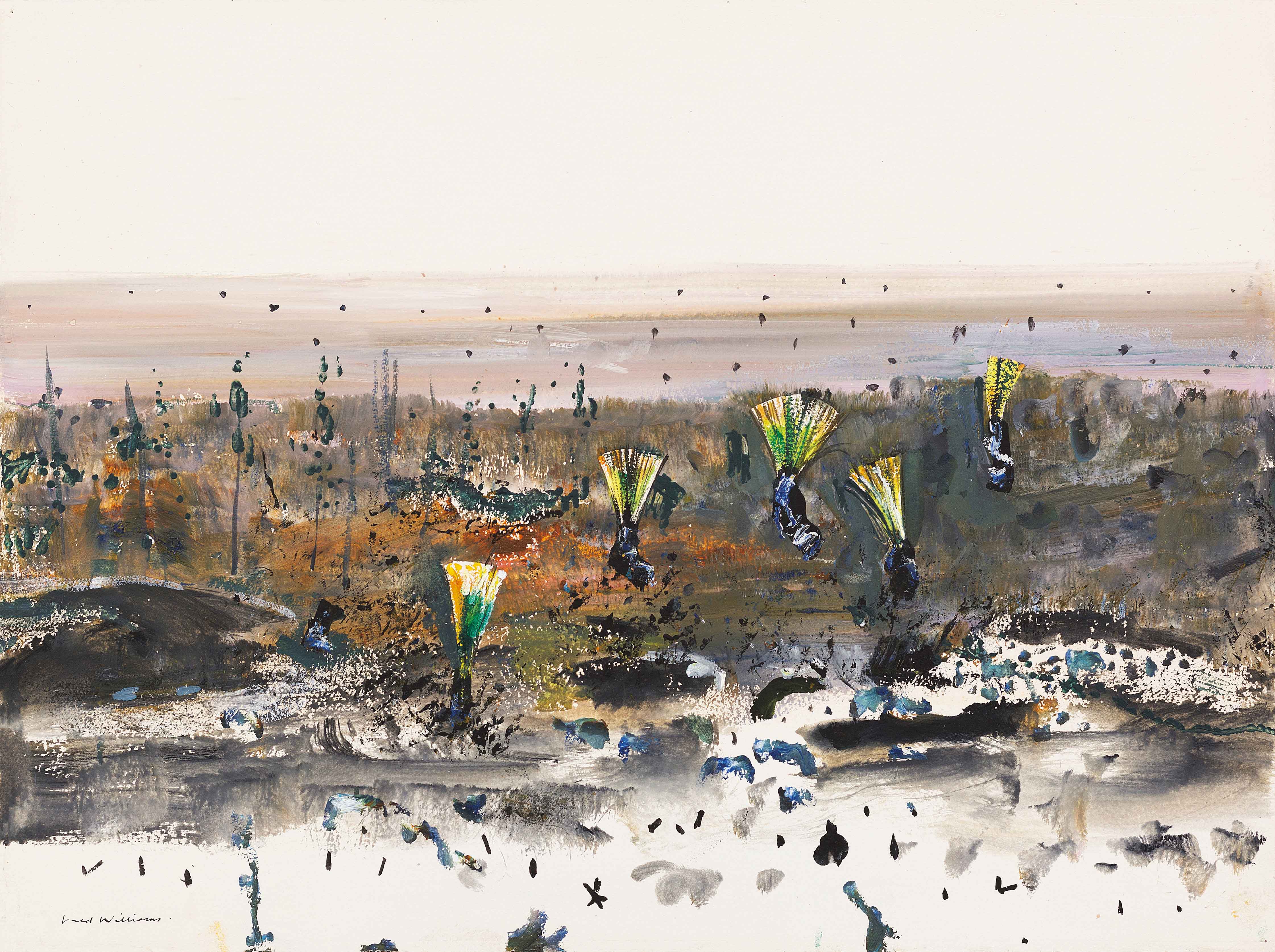
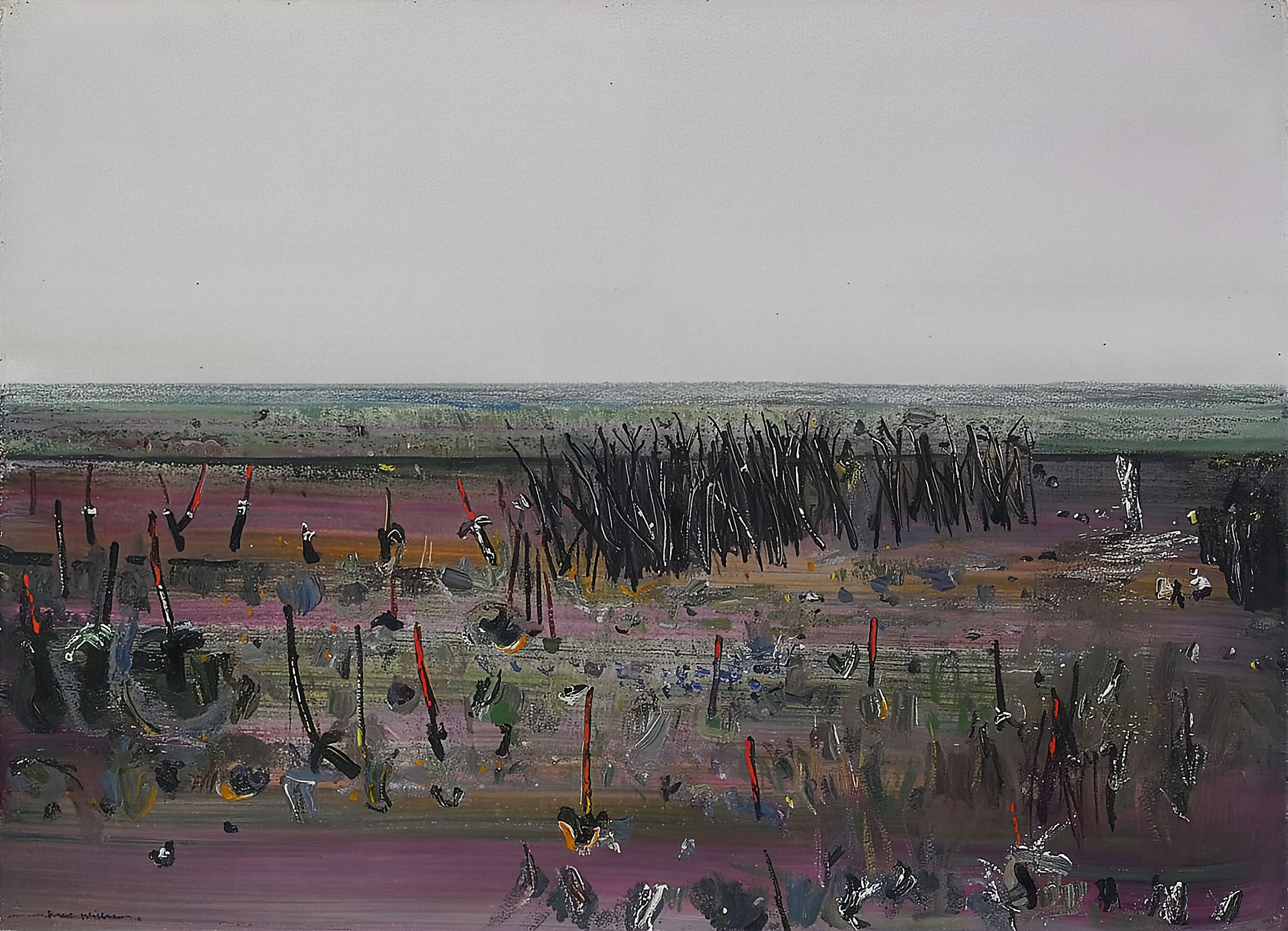
The island’s granite headlands, coastal scrub and expansive coastline became recurring subjects in Williams’ work. Rather than recording every detail, he painted the feeling of the landscape. A handful of marks became trees. Broad washes of colour suggested granite, sea and sky. Distance often occupied more of the canvas than the land itself. In doing so, Williams encouraged Australians to see their landscape in a new way.
This approach is evident in works such as Ti-tree Swamp, Flinders Island (1974), where Williams explored the relationship between land, sea and sky through changing light, colour and perspective. Rather than presenting a single moment, the paintings captured the landscape as something experienced over time. The series culminated in works such as Potboil Shoals, Flinders Island, now held in the High Court of Australia Collection and widely regarded as one of his finest coastal landscapes.
The paintings Williams created on Flinders Island represent one of the high points of his mature exploration of Australia’s coastal landscape. Together with the You Yangs, the Dandenong's and the Pilbara, they represent the evolution of an artist who continually found new ways to interpret the Australian landscape. Today, the Flinders Island paintings continue to feature in major retrospectives of his work and are recognised as some of the most compelling representations of Australia’s coastal environment.
LOW.jpg)
For Lyn, returning to Flinders Island through Outscape brings those memories full circle. The granite still catches the afternoon light. The coastline remains largely unchanged. Standing in those places today, it isn’t difficult to imagine the scenes that found their way onto his canvas.
More than half a century later, Fred Williams’ paintings continue to shape the way Australians see their landscape. Flinders Island remains part of that enduring legacy.
More stories from the island
%20(2).png)
%20(3).png)
Next Departure:
_
Ready to dive in? Outscape is waiting
